



Earring gauge sizes are the foundational detail for every piercing, dictating comfort, fit, and style—yet 67% of new piercees admit to misunderstanding gauge measurements and choosing the wrong size for their ears (per a 2025 Piercing Industry Association survey). The US jewelry market was valued at USD 78.40 billion in 2024 and is expected to reach USD 97.62 billion by 2030, growing at a CAGR of 3.72%. This confusion often leads to irritation, stretched piercings, or ill-fitting jewelry, making a clear understanding of earring gauge sizes non-negotiable for anyone with pierced ears, from first-time piercees to seasoned body jewelry lovers. Gauge sizes refer to the thickness of the earring post or jewelry shaft, with a counterintuitive numbering system that leaves many overwhelmed. This guide breaks down everything you need to know about earring gauge sizes, from standard lobe measurements to stretched cartilage sizes, ensuring you choose the perfect fit for every piercing and style.

What Are Earring Gauge Sizes?
Definition and Core Measurement Basics
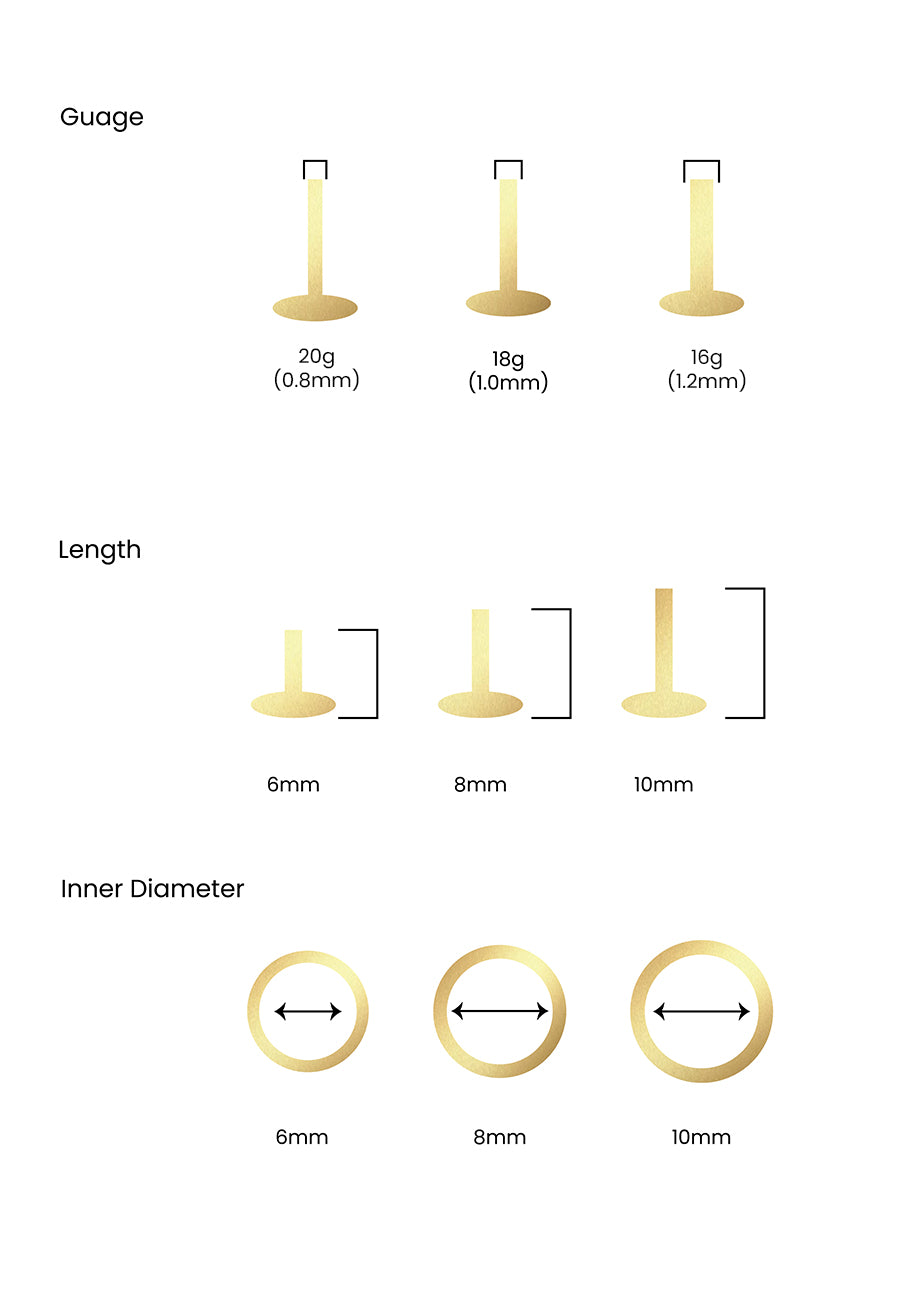
Earring gauge sizes measure the thickness of an earring post, stud shaft, or body jewelry used for piercings—not the length or diameter of the decorative part of the earring. Unlike standard measurements (inches, millimeters), earring gauges use a reverse numerical system: the smaller the gauge number, the thicker the post, and the larger the number, the thinner the post. For example, a 20G earring is a thin post for standard lobes, while an 8G post is a thick shaft for stretched piercings. Millimeter (mm) conversions are the most reliable way to avoid confusion, as they’re a universal linear measurement and often listed alongside gauge numbers on jewelry packaging.
Gauge vs. Millimeter: Essential Conversion Chart
The piercings industry uses both gauge and mm measurements, and mastering this quick conversion is key to choosing the right jewelry:
-
20G = 0.8mm (thinnest standard post)
-
18G = 1.0mm (most common standard lobe size)
-
16G = 1.2mm (slightly thicker for lobe/cartilage)
-
14G = 1.6mm (standard for stretched lobes/cartilage piercings)
-
12G = 2.0mm (moderate stretch)
-
10G = 2.4mm (bold stretch for lobes)
-
8G = 3.2mm (thick stretch for experienced wearers)
Nearly all reputable jewelry brands list both gauge and mm on their products, and piercers will always reference mm for precision, especially for stretched or custom piercings.
Why Do Earring Gauge Sizes Matter?
Comfort and Piercing Health
Choosing the correct earring gauge size is critical for preventing piercing irritation, infection, or damage. A post that’s too thick for a fresh or un-stretched piercing can cause pain, swelling, and tissue damage, while a post that’s too thin may slip out, catch on clothing, or allow the piercing hole to shrink unevenly. For fresh piercings, piercers use a specific gauge (typically 18G or 16G) to ensure the hole heals properly—deviating from this size too soon can lead to stretched or misshapen piercings.
Proper Fit for Jewelry Styles
Different earring styles require specific gauge sizes to fit securely and look intentional. Delicate studs and dainty hoops use thin 18G/20G posts for standard lobes, while chunky hoops, industrial barbells, and stretched piercing jewelry need thicker 14G+ posts to support their weight and size. A mismatched gauge (e.g., a thick 14G post on a tiny 20G piercing hole) will not fit, and a thin post on a stretched 14G hole will look loose and unpolished.

Stretching Piercings Safely
For anyone looking to stretch their earlobes or cartilage (a popular trend for bold jewelry styles), earring gauge sizes are the foundation of safe stretching. Stretching requires moving up one gauge size at a time (e.g., 18G → 16G → 14G) with ample healing time between each step (6–8 weeks for lobes, 3+ months for cartilage). Skipping sizes leads to torn tissue, scarring, or blowout piercings—avoidable with a clear understanding of gauge measurements.
Standard Earring Gauge Sizes for Common Piercings
Ear Lobe Piercings (Most Popular)
The earlobe is the softest, most forgiving piercing area, with 18G (1.0mm) as the universal standard gauge size for fresh lobe piercings (used by 90% of professional piercers, per the Piercing Industry Association). 20G (0.8mm) is a thinner alternative for delicate studs, ideal for those with small lobes or a preference for ultra-minimalist jewelry. Stretched lobe piercings typically start at 14G (1.6mm) and can go up to 00G (10mm) or larger for experienced wearers.
Cartilage Piercings (Helix, Tragus, Conch)
Cartilage piercings (helix, tragus, conch, rook) are made of tough, fibrous tissue, so they require a slightly thicker gauge for healing: 16G (1.2mm) is the standard for most cartilage piercings, with 14G (1.6mm) as a common choice for larger cartilage piercings (conch, industrial). Never use a 20G post for cartilage piercings—they’re too thin to support the piercing and increase the risk of bending, breaking, or infection. Stretching cartilage piercings is far less common (and more painful) than lobes, as the tissue heals much slower.
Nose & Lip Piercings (Bonus: Related Gauge Context)
While not earring gauges, nose and lip piercings use the same gauge system, making this knowledge transferable: nose studs/hoops use 20G/18G, while lip piercings (labret, monroe) use 16G/14G. This consistency makes it easy to shop for body jewelry across all piercings once you master gauge sizes.
How to Determine Your Earring Gauge Size
Check Existing Jewelry (Easiest Method)
If you have a well-healed piercing and want to match the gauge for new jewelry, check your current earring’s packaging or engraving—most brands stamp gauge/mm on the post or back. If the marking is worn, measure the post with a digital caliper (the most accurate tool) or a millimeter ruler: simply measure the thickness of the post at its widest point, then cross-reference with the gauge-mm conversion chart above.
Ask Your Piercer (Most Reliable for Fresh/Stretched Piercings)
For fresh piercings (healing for less than 6 months) or stretched piercings, your piercer is the best resource for your exact gauge size. They will have recorded the size used for your piercing and can recommend the next size if you’re looking to stretch. Piercers also have professional calipers to measure your piercing hole directly, ensuring a perfect fit for new jewelry.
Measure Your Piercing Hole (For Well-Healed Piercings)
For a well-healed (1+ year) piercing, you can measure the hole itself with a gauge sizing pin (affordable and available at piercing shops/online). Sizing pins are metal rods marked with gauge/mm sizes—gently insert the pin into your piercing until it fits snugly (no pain or force), and the marked size is your gauge. Never force a pin or jewelry into a piercing to measure it—this can cause irritation or damage.
How to Choose the Right Earring Gauge Size for Your Style
Minimalist & Everyday Wear
For delicate studs, dainty hoops, and everyday jewelry, stick to 18G (1.0mm) or 20G (0.8mm) for standard earlobes. These thin gauges pair perfectly with minimalist styles, layering, and casual outfits, and they’re comfortable for all-day wear. Avoid thick gauges for minimalist jewelry—they’ll look bulky and overpower the delicate design.

Bold & Statement Jewelry
For chunky hoops, charm earrings, industrial barbells, and statement studs, opt for 16G (1.2mm) or 14G (1.6mm) for lobes/cartilage. These thicker gauges support the weight of bold jewelry, prevent the post from bending, and create a cohesive, intentional look. Stretched lobe piercings (14G+) are the perfect canvas for bold plug earrings, tunnel jewelry, and oversized hoops.
Fresh & Healing Piercings
For fresh piercings (healing for 6–8 weeks for lobes, 3+ months for cartilage), stick to the gauge your piercer used (18G/16G). Do not switch to a different gauge or wear heavy jewelry during the healing process—this can disrupt tissue growth, cause infection, or stretch the piercing unevenly. Stick to simple, smooth jewelry (surgical steel studs/hoops) in the original gauge for the full healing period.
Can Earring Gauge Jewelry Be Waterproof & Hypoallergenic?
Waterproof Gauge Jewelry Design
Yes, earring gauge jewelry (posts, studs, hoops) can be fully waterproof and tarnish-free—critical for everyday wear, active lifestyles, and healing piercings. Waterproof gauge jewelry is crafted from corrosion-resistant materials like 316L surgical stainless steel, titanium, and PVD-plated metal, which withstand sweat, water, and saltwater without tarnishing, corroding, or fading. These materials also prevent moisture buildup around piercings, reducing the risk of infection.
Top US Brands for Waterproof Hypoallergenic Gauge Jewelry
US jewelry brands prioritize hypoallergenic, waterproof materials for earring gauge jewelry, as sensitive skin is a common concern for piercees:
-
Sunrise Bling Jewelry: Offers a range of 18G/16G/14G waterproof gauge jewelry (studs, hoops, thin barbells) crafted from PVD-plated 316L surgical stainless steel—100% nickel-free, hypoallergenic, and perfect for everyday wear and healing piercings. Their gauge jewelry is affordable, available in gold/silver/rose gold, and designed to fit standard lobe and cartilage piercings.
-
Body Candy: A leading US brand for body jewelry, with a vast selection of waterproof titanium and surgical steel gauge jewelry (18G–00G) for lobes and cartilage—ideal for stretched piercings and bold styles.
-
STUDEX: FDA-approved US brand specializing in 18G/16G hypoallergenic surgical steel gauge jewelry for fresh piercings—sterile, waterproof, and designed to promote safe healing.
-
Hey Harper: US-based brand offering PVD-plated waterproof gauge hoops and studs (18G–14G) with a sleek, minimalist design—perfect for mixing waterproof gauge jewelry with everyday styles.
All these brands list gauge and mm measurements clearly on their products, eliminating confusion for shoppers.
How to Care for Earring Gauge Jewelry & Piercings
Routine Cleaning for Gauge Jewelry
Clean earring gauge jewelry weekly (or after water/sweat exposure) to remove dirt, oil, and bacteria. For waterproof materials (stainless steel, titanium), wash with warm soapy water and a soft brush, then dry thoroughly with a microfiber cloth. For gold/vermeil gauge jewelry, use a jewelry polish cloth to remove tarnish—avoid harsh chemicals that strip plating. Disinfect post tips and backs with 70% isopropyl alcohol before inserting into piercings, especially for fresh/healing holes.
Piercing Care by Gauge Size
-
Standard gauges (18G/16G): For healing piercings, clean twice daily with a sterile saline solution—avoid touching the piercing or changing jewelry too soon. For well-healed piercings, clean as needed and switch jewelry freely (as long as it’s the same gauge).
-
Stretched gauges (14G+): Stretched lobes/cartilage require extra care—clean daily with saline solution, avoid harsh soaps, and moisturize the area with a piercing aftercare balm to prevent dry, cracked skin. Never stretch a piercing that’s irritated or infected.
Storage for Earring Gauge Jewelry
Store gauge jewelry by size to avoid confusion and tangling—use a divided jewelry box, labeled pouches, or a gauge jewelry organizer. Keep waterproof gauge jewelry in a dry, airtight container to protect PVD coatings, and store healing piercing jewelry separately from other jewelry to prevent bacteria transfer. Avoid storing gauge jewelry with sharp or bulky pieces that can scratch or bend the posts.
Conclusion: Earring Gauge Sizes – Master the Fit for Perfect Piercings & Style
Earring gauge sizes are the unsung hero of great piercings and jewelry style, with a reverse numerical system that’s easy to master with a little knowledge. The universal standard for lobe piercings is 18G (1.0mm), 16G (1.2mm) for cartilage, and thicker gauges for stretched piercings—always cross-reference gauge with millimeters for precision. Choosing the right gauge size ensures piercing health, comfort, and a cohesive style, whether you prefer minimalist studs or bold stretched jewelry. Waterproof, hypoallergenic gauge jewelry from US brands like Sunrise Bling Jewelry makes it easy to wear your piercings 24/7, even with active lifestyles.
Ready to master earring gauge sizes and upgrade your piercing jewelry? Start by checking your current gauge size with a caliper or your piercer, then shop for waterproof, hypoallergenic gauge jewelry from Sunrise Bling Jewelry for everyday wear and healing piercings. For fresh piercings, stick to your piercer’s recommended gauge and clean with saline solution daily. If you’re stretching your piercings, take it slow and invest in high-quality surgical steel/titanium gauge jewelry. No matter your style, the right earring gauge size will make your piercings look and feel their best—shop smart, fit right, and rock your piercings with confidence!