


When shopping for affordable gold jewelry, two terms you’ll often encounter are gold plated vs gold filled. But while they both sport a gold finish, their quality, durability, and value couldn’t be more different—and choosing the wrong one can mean the difference between a piece that lasts months and one that stays shiny for years. The global jewelry market size reached USD 365.9 Billion in 2024 and expected to reach USD 580.7 Billion by 2033, at a CAGR of 5%. According to the 2024 Jewelry Quality Report by the American Gem Society, 68% of consumers confuse gold plated and gold filled jewelry, leading to frustration when their “gold” piece tarnishes or fades prematurely. This guide breaks down the key distinctions between gold plated and gold filled jewelry: how they’re made, their pros and cons, durability, cost, and which one fits your lifestyle. Whether you’re hunting for a everyday necklace, a gift for a friend, or a budget-friendly alternative to solid gold, understanding gold plated vs gold filled will help you make a smart, long-lasting purchase.
What Is Gold Plated Jewelry?
Definition & Manufacturing Process
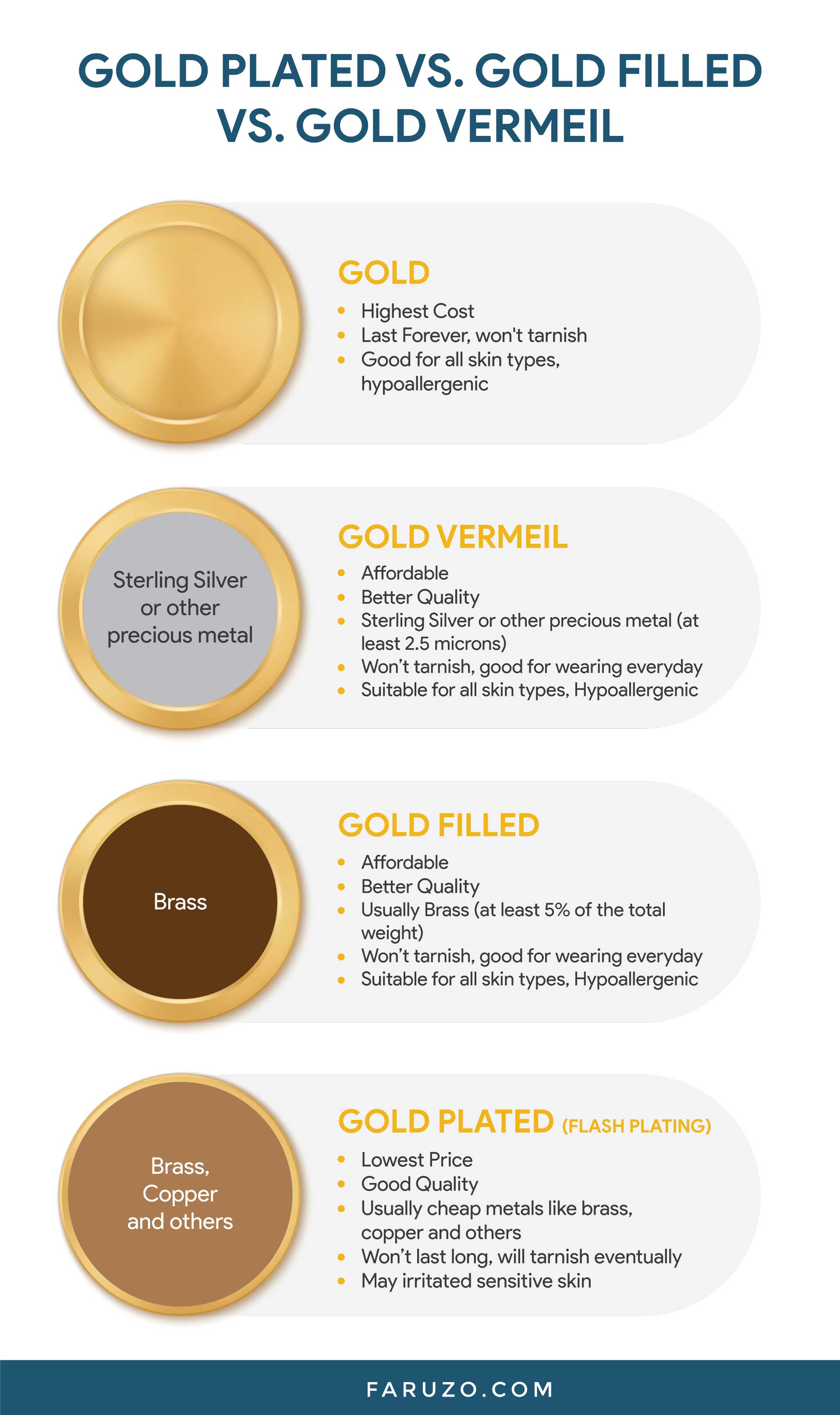
Gold plated jewelry is crafted by depositing a thin layer of real gold onto a base metal (usually brass, copper, or nickel) using an electrochemical process called electroplating. The gold layer is extremely thin—measured in microns (1 micron = 0.001 millimeters)—typically ranging from 0.175 microns (the minimum standard) to 2 microns. Some higher-quality gold plated pieces may be labeled “heavy gold plated,” which means they have a layer of 2.5 microns or more. The base metal is first cleaned and polished, then dipped in a gold solution and charged with electricity to bond the gold ions to its surface. This process creates the appearance of solid gold at a fraction of the cost, making gold plated jewelry a popular choice for trendy, affordable pieces.
Key Traits of Gold Plated Jewelry
The defining feature of gold plated jewelry is its thin gold layer. This means it retains the color and shine of gold but relies entirely on the base metal for structure. Gold plated pieces are often stamped with labels like “GP” (Gold Plated), “HGP” (Heavy Gold Plated), or a karat mark followed by “P” (e.g., “14KP” for 14k Gold Plated). They’re lightweight, affordable, and come in a wide range of designs—from delicate chains to statement earrings. However, the thin gold layer also means they’re prone to wear and tear, especially with frequent contact with skin oils, water, or chemicals.
What Is Gold Filled Jewelry?
Definition & Manufacturing Process
Gold filled jewelry (also called “rolled gold plate”) is made by bonding a thick layer of real gold to a base metal (usually brass) using heat and pressure, then rolling the combined metals into sheets to craft jewelry. Unlike gold plated, the gold layer here is much thicker—typically 5% of the total weight of the piece (or 1/20 of the weight, the minimum standard set by the FTC). To put it in perspective: a gold filled piece has about 100–200 times more gold than a gold plated piece of the same size. The gold layer is permanently bonded to the base metal, so it doesn’t flake off easily. Gold filled jewelry is often stamped with “GF” (Gold Filled), “RGP” (Rolled Gold Plate), or a karat mark (e.g., “14KGF” for 14k Gold Filled) to indicate its quality.
Key Traits of Gold Filled Jewelry
Gold filled jewelry’s thick gold layer gives it durability and longevity that gold plated can’t match. It has the same appearance as solid gold—same color, same shine—and can withstand everyday wear without tarnishing or fading. The bonding process ensures the gold layer stays intact, even with contact with skin, water, or mild chemicals. Gold filled pieces are slightly heavier than gold plated (due to the thicker gold layer) and feel more substantial. They’re also hypoallergenic for most people, as the thick gold layer prevents the base metal from touching the skin (unlike gold plated, where the base metal can show through if the gold wears off).
Gold Plated vs Gold Filled: Core Differences
Gold Layer Thickness & Bonding
The biggest difference between gold plated and gold filled is the thickness of the gold layer and how it’s attached to the base metal. Gold plated has a thin layer (0.175–2 microns) bonded via electroplating, while gold filled has a thick layer (5% of total weight) bonded via heat and pressure. This isn’t just a minor distinction—thickness directly impacts durability. A gold plated necklace might start to show brass underneath after a few months of daily wear, while a gold filled necklace can last 10–30 years with proper care. The bonding method also matters: electroplating creates a surface-level bond, while heat/pressure bonding creates a molecular bond that’s far more secure.
Durability & Longevity
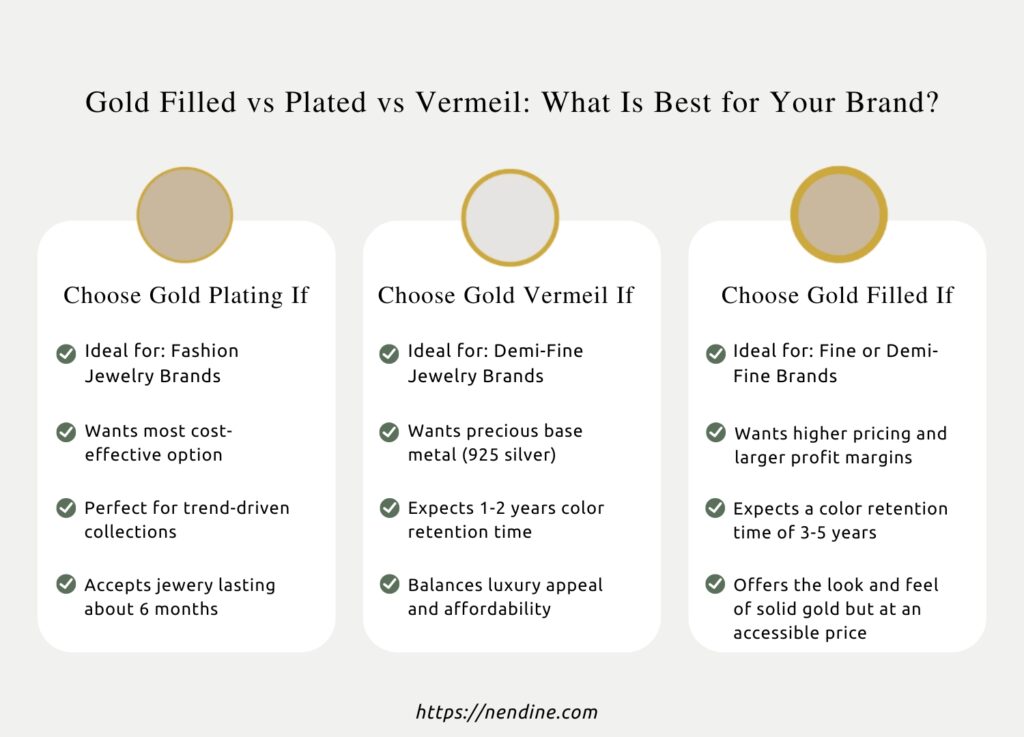
When it comes to standing up to everyday use, gold filled wins hands down. Gold plated jewelry is vulnerable to scratches, tarnishing, and wear—even simple actions like putting on lotion, washing your hands, or wearing it during a workout can wear away the gold layer. Over time, the base metal (often copper or nickel) will show through, turning the piece green or discolored. Gold filled jewelry, by contrast, is resistant to scratches and tarnish. It can be worn in the shower (in moderation), during light exercise, and with everyday activities without losing its gold finish. The American Gem Society reports that gold filled jewelry retains its appearance for 10+ years, while gold plated lasts just 6–12 months with regular wear.
Cost & Value
Gold plated jewelry is significantly more affordable than gold filled. A gold plated necklace might cost $15–$50, while a similar gold filled necklace costs $50–$200. The price difference reflects the amount of real gold used: gold filled contains far more gold, so it’s a better value in the long run. Gold plated is a budget-friendly option for trendy pieces you’ll wear for a season, but it’s not an investment. Gold filled, on the other hand, offers “solid gold quality” at a fraction of the cost (solid gold can cost $300+ for the same necklace) and retains its value over time. It’s also more likely to be passed down as a small heirloom, while gold plated is often discarded once it tarnishes.
Hypoallergenic Properties
If you have sensitive skin or nickel allergies, gold filled is the safer choice. Gold plated jewelry’s thin layer can wear off, exposing the base metal (which often contains nickel) and causing irritation, redness, or rashes. Gold filled’s thick gold layer acts as a barrier, so the base metal never touches your skin. Most people with mild to moderate metal allergies can wear gold filled jewelry without issue. That said, some gold filled pieces may have a tiny amount of nickel in the base metal, so if you have severe allergies, look for gold filled labeled “nickel-free.”

Gold Plated vs Gold Filled: Which Should You Choose?
Choose Gold Plated If…
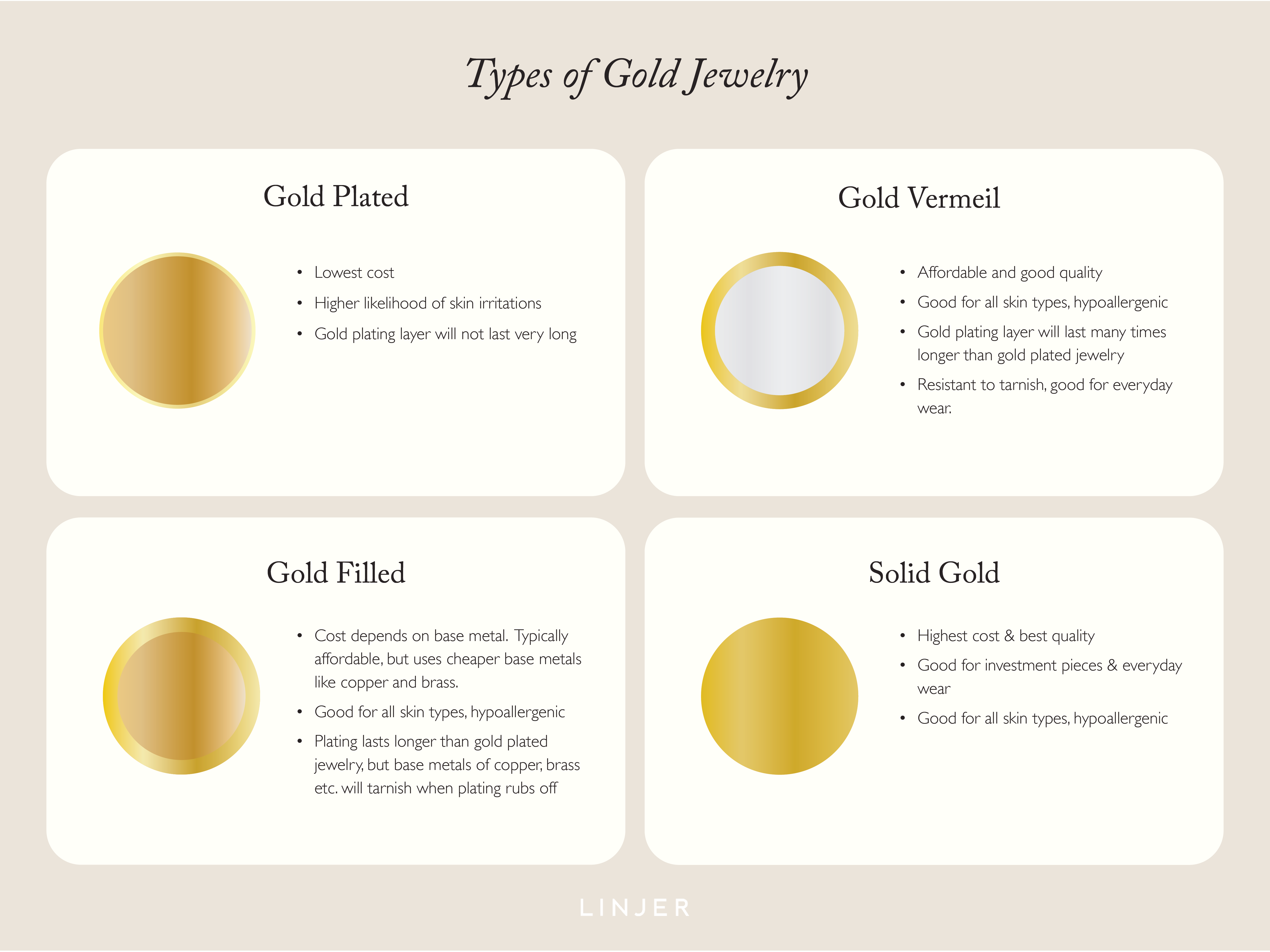
Gold plated jewelry is ideal for two scenarios: you want trendy, disposable pieces, or you’re on a tight budget. If you love trying out fast-fashion jewelry (like layered chains, tiny hoop earrings, or seasonal charms) but don’t want to spend a lot, gold plated is perfect. It lets you experiment with styles without committing to a high cost. Gold plated is also great for costume jewelry, party accessories, or gifts for someone who frequently changes their style. Just be prepared to replace it every few months and avoid wearing it in water or with chemicals.
Choose Gold Filled If…
Gold filled is the best choice if you want a piece that’s durable, long-lasting, and looks like solid gold. Opt for gold filled if you’re shopping for everyday staples: a classic necklace, a pair of hoop earrings, a bracelet, or a ring you’ll wear daily. It’s also a great option for gifts (like a birthday or graduation present) because it’s thoughtful and built to last. If you have sensitive skin, gold filled ensures you can wear jewelry without irritation. While it’s more expensive upfront, the 10+ year lifespan makes it a better value than replacing gold plated pieces repeatedly.
Caring for Gold Plated & Gold Filled Jewelry
Caring for Gold Plated Jewelry
To extend the life of gold plated jewelry, follow these tips: Remove it before showering, swimming, or washing your hands (water wears away the gold layer). Avoid wearing it when applying lotion, perfume, or hairspray (chemicals tarnish the gold). Store it in a soft jewelry pouch or separate compartment to prevent scratches. Clean it gently with a dry, soft cloth—never use soap, water, or jewelry cleaners (they’ll strip the gold). If it starts to tarnish, you can use a tiny amount of rubbing alcohol on a cotton swab to spot-clean, but this will shorten its lifespan.
Caring for Gold Filled Jewelry
Gold filled jewelry is low-maintenance, but proper care will make it last even longer: Remove it before swimming in chlorinated or saltwater (these can dull the finish over time). Clean it regularly with a soft cloth and mild soapy water (dish soap works) to remove skin oils. Rinse thoroughly and pat dry. Avoid harsh chemicals (like bleach or jewelry cleaners with ammonia). Store it in a jewelry box or pouch to prevent scratches. Unlike gold plated, you can polish gold filled jewelry with a gold-specific polishing cloth to restore its shine if it dulls.
If you want the short version before you finish reading: plating over gold plated jewelry made with 316L stainless steel is the one combination that gives you the gold look without the tarnish problem either finish is famous for.
Gold Plated vs Gold Filled: Final Verdict
The choice between gold plated vs gold filled comes down to your needs, budget, and how long you want the piece to last. Gold plated is cheap, trendy, and perfect for short-term wear—great for experimenting with styles. Gold filled is more expensive but durable, long-lasting, and nearly indistinguishable from solid gold—ideal for everyday staples and meaningful gifts. Remember: always check the stamp (GP/GF) when shopping to avoid being tricked into buying a lower-quality piece. Ready to shop for gold jewelry? If you’re still unsure whether gold plated or gold filled is right for a specific piece (like a necklace for your mom or a ring for yourself), leave a comment below with details, and our jewelry experts will help you decide. Invest in pieces that fit your lifestyle—and shine for years to come!


