


Whether you’re shopping for a gold plated ring for yourself, a sentimental gift for a loved one, or preparing to resize an existing piece, knowing how to measure your ring size accurately is essential. There’s nothing more frustrating than ordering a beautiful ring—only to find it’s too tight to slip on or too loose to stay on your finger. The global wedding ring market size is estimated to be USD 84.91 billion in 2024, projected to grow to over USD 140 billion by 2033 at a CAGR of 5.73%. Rings are a dominant, high-growth segment in the overall jewelry market, driven by personalization,, sustainable materials, and increasing demand for luxury and engagement, or wedding-related, items. The good news is, measuring your ring size is simple, affordable, and can be done from the comfort of your home with everyday items. In this blog, we’ll answer the question “how can I measure my ring size?” with easy-to-follow methods, pro tips to avoid mistakes, and answers to common FAQs—so you can get the perfect fit every time.
Why Accurate Ring Size Measurement Matters
Avoid Wasting Time and Money
Ordering a ring in the wrong size often leads to returns, exchanges, or costly resizing—especially for delicate pieces like gold plated rings, which can be damaged during resizing. By measuring your ring size correctly the first time, you’ll save time waiting for exchanges and avoid unnecessary expenses. For gold plated rings specifically, resizing can strip the thin gold layer, exposing the base metal and ruining the ring’s appearance—so getting the size right upfront is even more important.
Ensure Comfort and Wearability
A well-fitted ring should feel comfortable all day long—snug enough to stay on your finger, but loose enough to slide over your knuckle without struggle. A ring that’s too tight can leave indentations, restrict blood flow, or become stuck (a common and stressful issue!). A ring that’s too loose is at risk of falling off and getting lost, especially during daily activities like washing dishes, working out, or typing. Accurate measurement ensures your ring is both comfortable and secure.

Perfect for Gifting
If you’re gifting a ring (like a gold plated ring for your daughter, partner, or friend), measuring their ring size discreetly is key to making the gift feel thoughtful and personalized. No one wants to receive a ring that doesn’t fit—even if it’s beautiful. With the methods below, you can measure their size without spoiling the surprise, ensuring your gift is something they’ll wear and cherish for years.
5 Easy Methods to Measure Your Ring Size (At Home)
Method 1: Use a Printable Ring Size Chart
A printable ring size chart is one of the simplest and most accessible ways to measure your ring size. Most jewelry brands (including Sunrise Bling, a top US brand for waterproof gold plated rings) offer free printable charts on their websites—just search for “printable ring size chart” to find one. Here’s how to use it:

1. Print the chart on standard 8.5x11 paper, making sure to select “actual size” or “100% scale” in your printer settings. Do not fit the chart to the page—this will distort the measurements.
2. Verify the chart is accurate by measuring the “test circle” provided (usually labeled with a diameter, like 16mm). If the test circle doesn’t match the stated measurement, reprint the chart with the correct settings.
3. Take a ring that already fits the finger you want to measure (this works best if the ring is a plain band with no large gemstones or intricate designs that could skew the measurement).
4. Place the ring over the circles on the chart, matching the inner edge of the ring to the outer edge of the circle. The circle that fits perfectly inside the ring is your ring size.

Method 2: Use String or Floss (No Tools Needed)
If you don’t have a printer or a spare ring, you can measure your ring size with string, floss, or even a thin strip of paper—items you probably already have at home. Here’s the step-by-step process:
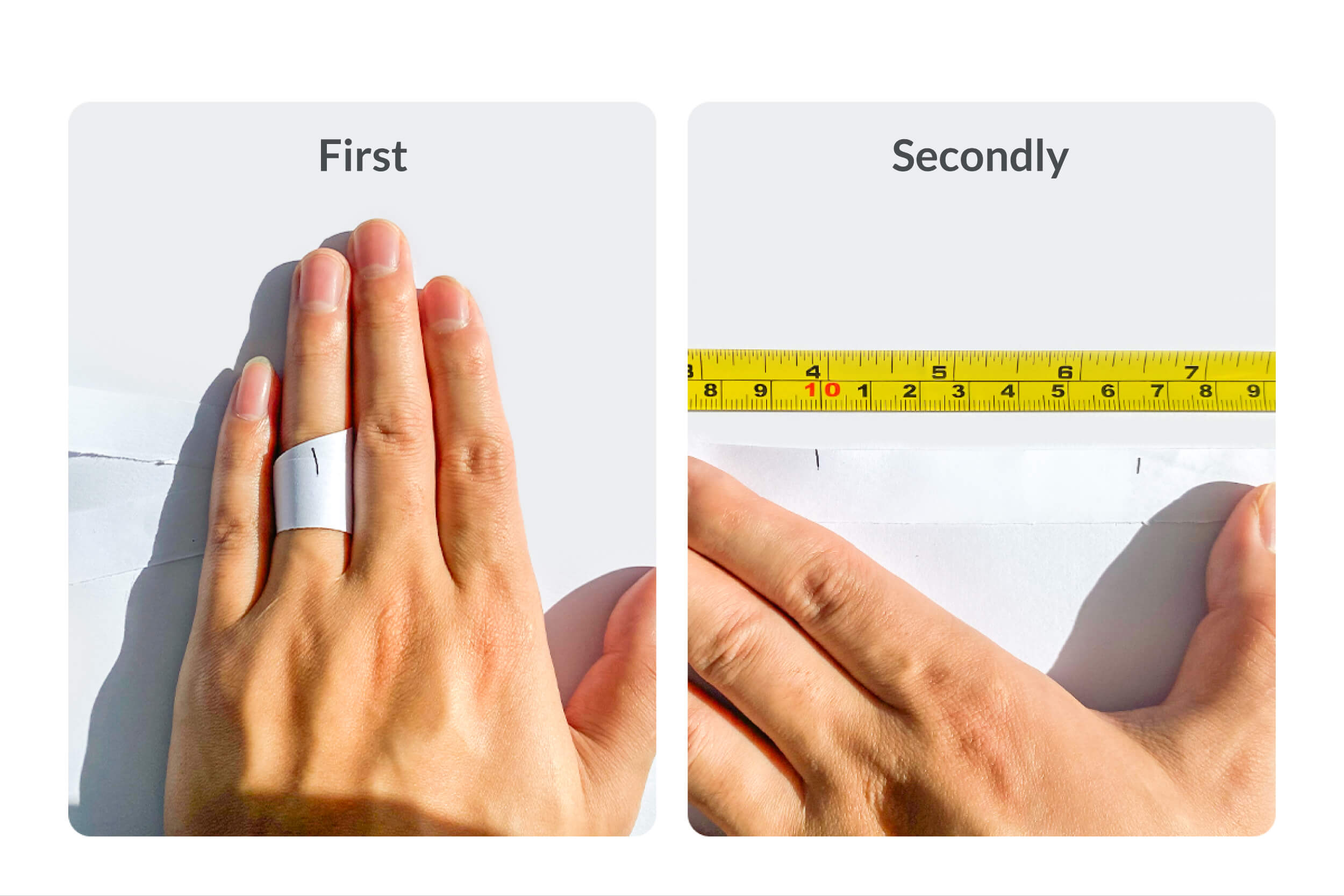
1. Cut a piece of string, floss, or paper that’s about 6 inches long and 1/4 inch wide (thinner materials like floss work best for accuracy).
2. Wrap the string tightly around the base of the finger you want to measure—make sure it’s snug, but not so tight that it leaves a mark or feels uncomfortable. The string should fit the same way a well-fitted ring would.
3. Use a pen or marker to make a small mark on the string where the two ends overlap (this is where the string forms a complete circle around your finger).
4. Lay the string flat on a ruler and measure the distance from the start of the string to the mark you made. This measurement is the circumference of your finger.
5. Convert the circumference to your ring size using a ring size conversion chart (most charts list circumference in millimeters and the corresponding US, UK, or EU size).
Method 3: Use a Ring Sizer Tool
For the most accurate at-home measurement, invest in a ring sizer tool. These tools are affordable (usually $5–$10 on Amazon or at craft stores) and easy to use, making them perfect for anyone who plans to buy multiple rings or wants to avoid guesswork. Here’s how to use one:
1. Ring sizers typically come in two styles: a flexible band with marked sizes (like a measuring tape) or a set of plastic or metal rings in different sizes.
2. For the flexible band: Wrap it around the base of your finger, adjusting it until it’s snug but comfortable. The number that lines up with the end of the band is your ring size.
3. For the ring set: Try on each ring one by one, sliding it over your knuckle and onto the base of your finger. The ring that fits comfortably (snug but not tight) is your size. Avoid rings that are too loose (they’ll spin or fall off) or too tight (they won’t slide over your knuckle easily).
Method 4: Measure an Existing Ring (Best for Gifting)
If you’re measuring someone else’s ring size (for a gift) and don’t want to ask them directly, use one of their existing rings that fits the finger you’re shopping for. This method is discreet and accurate—just follow these steps:
1. Find a ring that the person wears regularly on the finger you want to measure (e.g., if you’re buying a ring for their ring finger, use a ring they already wear there).
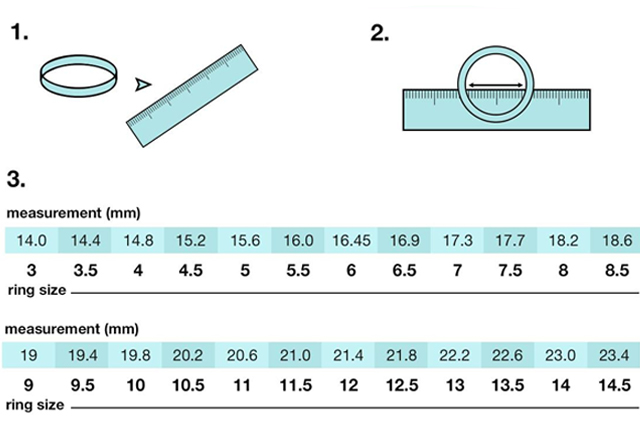
2. Place the ring flat on a ruler and measure the inner diameter of the ring (the distance across the center of the ring, from one inner edge to the other). Measure in millimeters for the most accuracy.
3. Use a ring size conversion chart to find the corresponding ring size (inner diameter in millimeters translates directly to a specific size).
Pro tip: If the ring has a wide band (more than 4mm), add half a size to your measurement—wide bands fit tighter than thin bands, so this ensures a comfortable fit.
Method 5: Visit a Local Jeweler (Most Accurate)
If you want to be 100% sure of your ring size, visit a local jeweler. Jewelers have professional ring sizer tools (like metal mandrels) that provide precise measurements, and they can help you avoid common mistakes (like measuring the wrong finger or ignoring knuckle size). Best of all, this service is almost always free—even if you don’t buy a ring from the jeweler.
When visiting a jeweler, wear the same type of clothing you would on a typical day (avoid tight sleeves that might swell your fingers) and measure your finger at the same time of day you plan to wear the ring (more on that below).
Pro Tips to Avoid Common Ring Size Mistakes
Measure Your Finger at the Right Time of Day
Finger size can change throughout the day due to temperature, hydration, and activity. Fingers are typically smaller in the morning (when you’re dehydrated) and larger in the evening (after a day of eating, drinking, and activity). The best time to measure your ring size is in the late afternoon or early evening—when your fingers are at their “normal” size. Avoid measuring when your hands are cold (fingers shrink) or hot/swollen (fingers expand), as this will lead to inaccurate measurements.
Consider Your Knuckle Size
If you have larger knuckles, you’ll need to measure both your knuckle and the base of your finger. The ring needs to slide over your knuckle, so if your knuckle is bigger than the base of your finger, choose a size that fits the knuckle (but still feels snug on the base). If the difference is significant, you may want to consider a ring with a hinge (though these are less common for gold plated rings) or size up slightly to ensure it slides over your knuckle easily.
Measure the Correct Finger
This may seem obvious, but it’s easy to measure the wrong finger—especially if you’re in a hurry. If you’re buying a ring for your ring finger, measure your ring finger (left hand for engagement/wedding rings, right hand for everyday rings). If you’re buying a stackable ring, measure the specific finger you plan to wear it on—each finger can be a different size!
Don’t Measure Too Tight or Too Loose
The biggest mistake people make when measuring their ring size is wrapping the string or sizer too tight or too loose. A tight measurement will result in a ring that’s too small, while a loose measurement will result in a ring that’s too big. Aim for a snug fit—you should be able to slide the sizer or string over your knuckle with a little resistance, but it shouldn’t feel uncomfortable.
Account for Band Width
Wide bands (4mm or more) fit tighter than thin bands (2–3mm), even if they’re the same size. If you’re planning to buy a wide gold plated ring, add half a size to your measurement to ensure a comfortable fit. For example, if your finger measures a size 7 with a thin sizer, choose a size 7.5 for a wide band.
Ring Size Conversion Chart (US Sizes)
Once you’ve measured the circumference or inner diameter of your finger, use this conversion chart to find your US ring size (the most common size system used in the US):
| US Size | Finger Circumference (mm) | Inner Diameter (mm) |
|---------|----------------------------|----------------------|
| 4 | 46.5 | 14.8 |
| 5 | 49.3 | 15.7 |
| 6 | 52.2 | 16.6 |
| 7 | 55.0 | 17.5 |
| 8 | 57.9 | 18.4 |
| 9 | 60.7 | 19.3 |
| 10 | 63.5 | 20.2 |
| 11 | 66.4 | 21.1 |
Common FAQs About Measuring Ring Size
Can I measure my ring size if I don’t have a ring or tools?
Yes! The string or floss method works perfectly without any special tools. All you need is string, floss, or paper, a pen, and a ruler. This is the best method for emergency measurements or when you’re on the go.
Does finger size change with weight gain or loss?
Yes, significant weight gain or loss can change your finger size—just like it changes other parts of your body. If you’ve lost or gained 10+ pounds, it’s a good idea to remeasure your ring size before buying new rings or resizing existing ones.
Is my ring size the same for all fingers?
No! Most people have different sizes for each finger. For example, your index finger may be a size 7, while your ring finger is a size 6.5. Always measure the specific finger you plan to wear the ring on.
Can I measure a gold plated ring the same way as a solid gold ring?
Yes! The material of the ring (gold plated, solid gold, silver, etc.) doesn’t affect how you measure your finger size. The only thing to consider is the band width—wide gold plated bands may require a half-size up, just like any other wide band.
What if my measurement is between two sizes?
If your finger measurement falls between two sizes, always size up. It’s better to have a ring that’s slightly loose (you can add a ring guard to make it snugger) than one that’s too tight (which can be uncomfortable or impossible to remove).
Conclusion: Measure Confidently for the Perfect Fit
Now that you know how to measure your ring size accurately, you can shop for rings (including beautiful gold plated rings) with confidence—no more guessing, returns, or ill-fitting pieces. Whether you use the string method, a printable chart, a ring sizer tool, or visit a jeweler, the key is to take your time, follow the steps carefully, and avoid common mistakes like measuring at the wrong time of day or ignoring your knuckle size.
Remember, a well-fitted ring is one you’ll wear every day—so taking a few extra minutes to measure correctly is worth it. If you’re ready to put your new measurement skills to use, check out Sunrise Bling Jewelry’s collection of waterproof gold plated rings—available in a range of sizes and styles, perfect for everyday wear or gifting. With your accurate ring size in hand, you’ll find the perfect gold plated ring that fits like it was made just for you.
Still have questions about how to measure your ring size? Leave a comment below, and we’ll help you get the perfect fit!