

Getting the right ring size is crucial—whether you’re buying a ring for yourself, shopping for an engagement ring, or picking out a thoughtful gift for a loved one. A ring that’s too tight can be uncomfortable, leave marks on your finger, or even get stuck, while a ring that’s too loose risks slipping off and getting lost. The global ring jewelry market is a major, rapidly growing sector, with the wedding ring segment alone projected to exceed USD 100-185 billion by 2033–2034. Rings consistently hold the largest share of the overall jewelry market (approx. 34–43%), driven by strong demand for engagement rings, wedding bands, and fashion "stacking" trends. According to a 2025 Jewelry Consumer Report, 42% of people who purchase rings online end up returning them due to incorrect sizing, and 37% of engagement ring shoppers admit to guessing their partner’s ring size (leading to costly resizing later). This comprehensive guide will walk you through everything you need to know about how to size ring, including at-home methods, professional sizing tips, common mistakes to avoid, and how to measure for different ring styles. By the end, you’ll have all the tools to get a perfect, comfortable fit every time.

Why Ring Sizing Matters (And What Happens If You Get It Wrong)
The Importance of a Properly Sized Ring
A properly sized ring should feel secure on your finger—snug enough that it doesn’t slide off easily, but loose enough that you can twist it gently and remove it without force. Beyond comfort, correct ring sizing protects your investment: expensive rings (like engagement rings or family heirlooms) that are too loose are at risk of being lost, while rings that are too tight can cause discomfort, restrict blood flow, or even require professional help to remove if they get stuck. For gifts, getting the size right adds a personal touch and avoids the awkwardness of asking for a resize, especially for surprise occasions like proposals or birthdays.

Common Consequences of Incorrect Ring Sizing
Incorrect ring sizing can lead to a range of frustrating issues. If your ring is too tight: it may leave red marks or indentations on your finger, cause numbness or tingling (from restricted blood flow), or become stuck—requiring a jeweler to cut it off (which can damage the ring). If your ring is too loose: it may slip off during daily activities (like washing dishes, exercising, or sleeping), get lost, or spin excessively on your finger (which can cause wear and tear over time). For engagement rings or wedding bands—pieces you’ll wear every day—these issues are even more problematic, as they can ruin the joy of wearing a meaningful piece of jewelry.
Understanding Ring Size Charts (US, UK, and International Sizes)
US Ring Size Chart (Most Common for North America)
The US ring size system is the most widely used in North America, and it’s based on the circumference of your finger (measured in millimeters). US ring sizes range from 0 (smallest) to 13 (largest), with half sizes available for a more precise fit. For example: a US size 5 corresponds to a finger circumference of 49.3mm, a size 6 is 51.9mm, a size 7 is 54.4mm, and a size 8 is 57.0mm. Most women’s ring sizes fall between 5 and 7, while most men’s ring sizes fall between 8 and 10.5—but this varies widely, so always measure to be sure.

UK and International Ring Size Conversions
If you’re shopping for rings from international brands, it’s important to understand how US sizes convert to other systems. The UK ring size system uses letters (from A to Z+), with each letter corresponding to a specific circumference. For example: US size 5 = UK size J, US size 6 = UK size L, US size 7 = UK size N, and US size 8 = UK size P. European (EU) sizes are based directly on the finger circumference in millimeters (e.g., EU size 50 = 50mm circumference = US size 5.5). Other countries (like Japan, Australia, and Canada) use similar systems to the US or EU, so always check a conversion chart if you’re unsure.
Key Tips for Using Ring Size Charts
When using a ring size chart, there are a few key tips to ensure accuracy. First: always measure your finger circumference (not just the diameter) for the most precise fit. Second: use a chart that includes millimeters, as this is the universal measurement used across all sizing systems. Third: if your measurement falls between two sizes, opt for the larger size—this ensures a more comfortable fit, especially if your fingers swell throughout the day. Finally: remember that different ring styles (like wide bands or thick eternity rings) may require a half-size up, so adjust accordingly.

At-Home Methods for How to Size Ring (No Jeweler Needed)
Method 1: String or Paper Strip Method (Most Affordable)
The string or paper strip method is one of the easiest and most affordable ways to measure your ring size at home. Here’s how to do it: 1. Cut a thin strip of paper (or use a piece of string) that’s about 1/4 inch wide and 6 inches long. 2. Wrap the paper/string around the base of the finger where you’ll wear the ring—make sure it’s snug but not tight (you should be able to slide a finger between the strip and your skin). 3. Mark the spot where the end of the strip overlaps with itself. 4. Lay the strip flat on a ruler and measure the distance from the start to the mark (in millimeters). 5. Use a US ring size chart to find your size based on the circumference measurement. Pro tip: Repeat this 2–3 times to ensure accuracy, as it’s easy to wrap the strip too tight or too loose.
Method 2: Ring Sizer Tool (Most Accurate At-Home Option)
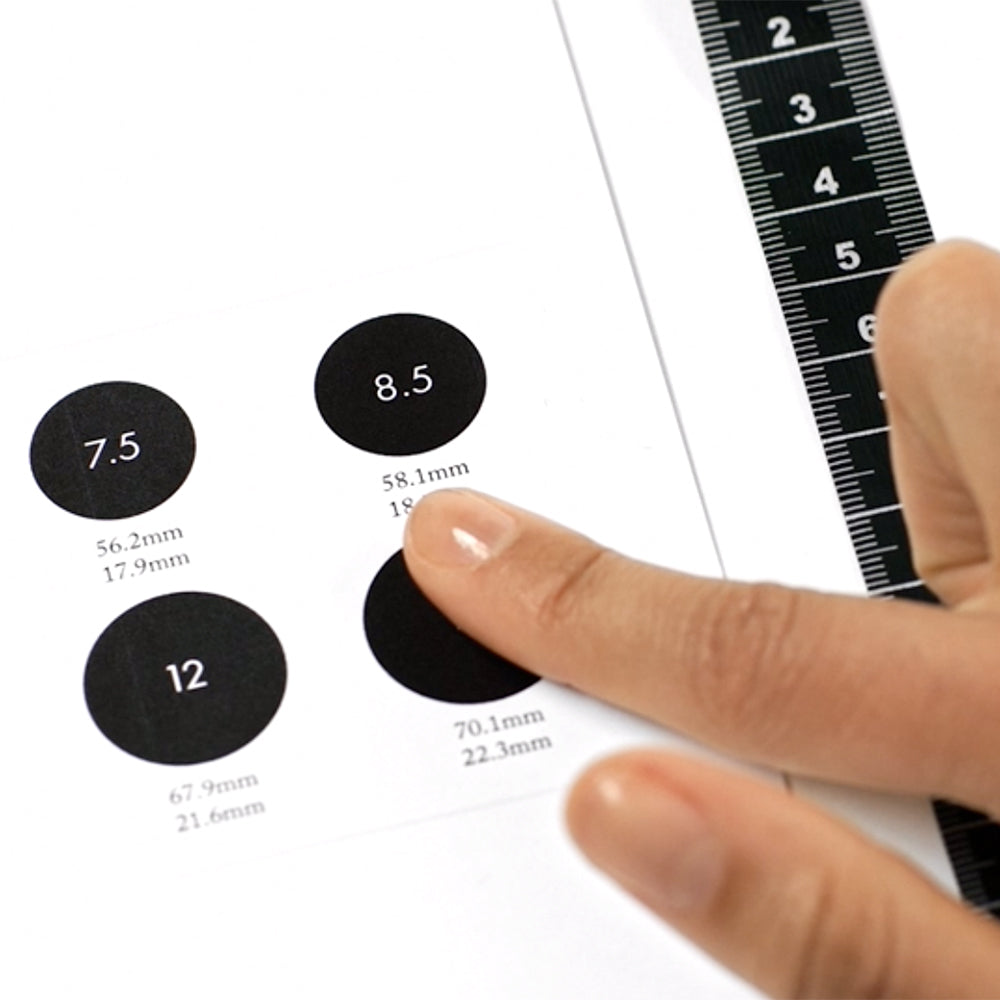
For a more accurate at-home measurement, invest in a ring sizer tool. These tools are affordable (usually $5–$10 online) and come in two types: plastic ring sizers (similar to a keychain with labeled rings) or metal ring mandrels (a tapered rod with size markings). To use a plastic ring sizer: simply slide the labeled rings onto your finger until you find one that fits snugly but comfortably—this is your ring size. To use a metal mandrel: take a ring that already fits you (or the person you’re shopping for), slide it onto the mandrel, and read the size marking where the ring stops. This method is especially useful if you’re measuring for someone else and don’t want to ask their size directly.

Method 3: Use an Existing Ring (Perfect for Gift Shopping)
If you’re shopping for a gift and don’t want to ruin the surprise, use an existing ring that fits the person’s finger. Here’s how: 1. Take a ring that the person wears regularly on the same finger (or a similar-sized finger) where they’ll wear the new ring. 2. Lay the ring flat on a piece of paper and trace the inner circle with a pencil. 3. Use a ruler to measure the diameter of the circle (from one side to the other, passing through the center). 4. Multiply the diameter by 3.14 (pi) to get the circumference (in millimeters). 5. Use a ring size chart to find the corresponding size. Note: This method works best for plain bands—rings with thick edges or intricate designs may have a slightly larger inner diameter, so adjust by a half-size if needed.
Professional Ring Sizing (When to Visit a Jeweler)
When At-Home Methods Aren’t Enough
While at-home methods are convenient, there are times when you should visit a jeweler for professional sizing. These include: if you’re buying an expensive ring (like an engagement ring or wedding band) and want 100% accuracy; if your fingers are unusually shaped (e.g., wide knuckles, swollen joints); if you’re measuring for a ring with a wide band (which requires a different size than a thin band); or if you’ve tried at-home methods and gotten inconsistent results. Jewelers use professional tools (like digital calipers or metal ring sizers) to measure your finger precisely, and they can also give advice on sizing for different ring styles.
What to Expect During a Professional Sizing
A professional ring sizing at a jewelry store is quick, free, and easy. Here’s what to expect: 1. The jeweler will ask which finger you’ll wear the ring on (since finger sizes vary between hands and even between fingers). 2. They’ll use a set of metal ring sizers (labeled with US, UK, or EU sizes) and slide them onto your finger until they find the perfect fit. 3. They may also measure your finger with a digital caliper to confirm the circumference (in millimeters) for extra accuracy. 4. If you’re unsure between two sizes, the jeweler will recommend the larger size (for comfort) or suggest a half-size adjustment. 5. They’ll also give you tips on how to maintain the fit, such as avoiding sizing during hot weather (when fingers swell) or after exercise.
Factors That Affect Ring Size (Don’t Ignore These!)
Temperature and Time of Day
Your finger size can change throughout the day and based on temperature. Fingers tend to swell in hot weather, after exercise, after eating a salty meal, or when you’re dehydrated. They also tend to be smaller in the morning (before you’ve eaten or drank anything) and in cold weather. For the most accurate measurement, measure your finger at room temperature, in the afternoon (when your fingers are at their “normal” size), and avoid measuring after exercise, eating, or being in extreme temperatures. If you measure during a time when your fingers are swollen, you may end up with a ring that’s too loose when your fingers return to their normal size.
Ring Style (Wide Bands vs. Thin Bands)
The style of the ring affects the size you need. Wide bands (20mm or more) require a half-size to a full-size larger than thin bands (2–5mm). This is because wide bands cover more of your finger and don’t flex as easily, so a snug fit for a thin band will feel tight for a wide band. For example: if you wear a size 7 in a thin band, you may need a size 7.5 or 8 in a wide band. Eternity rings (which have diamonds or gemstones all the way around) also require a slightly larger size, as the rigid design doesn’t stretch or flex like a plain band.
Health and Lifestyle Factors
Certain health and lifestyle factors can also affect your ring size. For example: pregnancy, weight gain, or fluid retention can cause fingers to swell (sometimes permanently, in the case of pregnancy). Conditions like arthritis can cause joint swelling, making it harder to slide rings over knuckles (in this case, a larger size or a ring with a hinge may be better). If you lead an active lifestyle (e.g., exercise regularly, work with your hands), you may want a slightly looser fit to accommodate swelling during activity. If you travel frequently (especially to places with extreme temperatures), your finger size may fluctuate, so a flexible fit is key.
Common Mistakes to Avoid When Sizing a Ring
Mistake 1: Measuring Too Tight or Too Loose
One of the most common mistakes is measuring your finger too tight or too loose. If you wrap the string/paper too tight, you’ll get a smaller size than you need, leading to an uncomfortable ring. If you wrap it too loose, you’ll get a larger size, leading to a ring that slips off. To avoid this, make sure the string/paper is snug but not tight—you should be able to slide a finger between the strip and your skin. Repeat the measurement 2–3 times to ensure consistency.
Mistake 2: Using the Wrong Finger or Hand
Finger sizes vary between hands and even between fingers. For example: most people have larger fingers on their dominant hand (e.g., if you’re right-handed, your right ring finger is slightly larger than your left). If you’re buying a ring for your left ring finger (e.g., an engagement ring), measure that specific finger—don’t assume it’s the same size as your right ring finger. If you’re shopping for a gift, try to find out which finger the person will wear the ring on (e.g., middle finger, ring finger) to get the right size.
Mistake 3: Ignoring Half Sizes
Many people skip half sizes and opt for the nearest full size, but this can lead to an ill-fitting ring. Half sizes are designed to provide a more precise fit, especially if your measurement falls between two full sizes. For example: if your finger circumference is 53mm (between US size 6 and 7), a size 6.5 will fit much better than a size 6 or 7. Most jewelers offer half sizes, and many online retailers also carry half sizes—don’t be afraid to use them!
How to Resize a Ring (If You Got the Size Wrong)
When Resizing Is Possible (and When It’s Not)
If you end up with a ring that’s the wrong size, don’t panic—many rings can be resized by a professional jeweler. However, not all rings can be resized: rings with intricate designs (e.g., filigree, engravings), rings with gemstones all the way around (eternity rings), or rings made from certain materials (e.g., titanium, tungsten) are difficult or impossible to resize. Plain bands (gold, silver, platinum) can usually be resized up or down by 1–2 sizes without damaging the ring. If you’re unsure if a ring can be resized, check with the jeweler before purchasing.
What to Expect During a Ring Resize
Ring resizing is a simple process that takes 1–3 days (depending on the jeweler and the complexity of the ring). Here’s how it works: to make a ring larger, the jeweler will cut the band and add a small piece of metal (matching the ring’s material) before soldering it back together and polishing it. To make a ring smaller, the jeweler will cut a small piece of the band, solder the ends together, and polish it to hide the seam. The cost of resizing varies depending on the material (e.g., gold vs. platinum) and the size change, but it’s usually $20–$100. For expensive rings, it’s worth investing in professional resizing to avoid damaging the piece.
Conclusion: Master How to Size Ring for Perfect Fit Every Time
Knowing how to size ring correctly is essential for anyone buying or gifting jewelry. Whether you use an at-home method (like the string method or a ring sizer tool) or visit a professional jeweler, taking the time to measure accurately will save you time, money, and frustration in the long run. Remember to consider factors like temperature, ring style, and lifestyle when measuring, and avoid common mistakes like measuring too tight or ignoring half sizes. With the tips in this guide, you’ll be able to get a perfect, comfortable fit for any ring—whether it’s a simple everyday band, a glamorous engagement ring, or a thoughtful gift for a loved one.
Ready to put your ring sizing knowledge to use? If you’re shopping for a ring online, use a ring sizer tool to ensure accuracy before purchasing. If you’re unsure about your size, visit a local jeweler for a free professional sizing. And if you already have a ring that’s the wrong size, don’t hesitate to get it resized—your fingers (and your jewelry) will thank you. With the right size, you’ll be able to wear your ring with confidence, knowing it’s comfortable, secure, and perfectly suited to you.