


You can tell if jewelry is real gold by checking the hallmark, testing it with a magnet, and weighing it in your hand — but the only fully reliable method is having a jeweler run an acid or electronic test.
Whether you inherited a piece, bought secondhand, or just want to know what you're wearing, it's smart to check before you assume. The good news: most of the checks you can do at home in two minutes. The honest part: "real gold" tests are easy to get wrong with modern gold-plated jewelry, so we'll also tell you exactly what the stamps mean — and when gold-plated is actually the smarter buy.

What "Real Gold" Actually Means
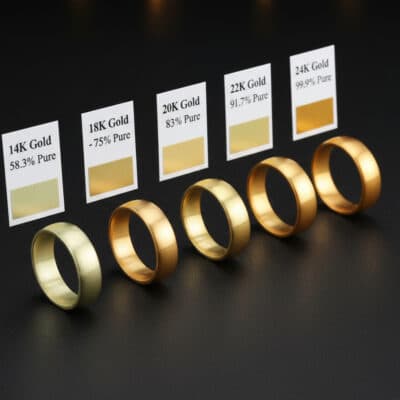
Real gold comes in karats — the number tells you how much pure gold is in the metal:
- 24K: pure gold (99.9%). Soft, expensive, rarely used for everyday jewelry.
- 18K: 75% gold — the luxury standard for fine jewelry.
- 14K: 58.5% gold — the most common durable gold for daily wear.
- 10K: 41.7% gold — the minimum to legally be called gold in the US.
Everything else is either gold-filled (a thick gold layer bonded to base metal), gold-plated (a thin gold layer over stainless steel or another base), or not gold at all. Those are real products — they just aren't solid gold.
The Home Tests (in order of reliability)
1. Check the Hallmark
Look for a tiny stamp on the clasp, inner band, or back of the piece. Real gold is almost always marked: 24K, 18K, 14K, 10K, 750 (18K), 585 (14K), or 417 (10K). Warning signs: stamps like "18K GP," "18K GEP," or "18K HGE" mean gold-plated or gold electroplated — it's a coating, not solid gold. No stamp doesn't automatically mean fake (older or small pieces skip it), but it means you should test further.

2. The Magnet Test
Gold is not magnetic. Hold a strong magnet near the piece — if it's pulled toward the magnet, it contains a magnetic base metal and isn't solid gold. Caveat: some gold alloys include small amounts of magnetic metals and still test "real," and a clasp or finding can be magnetic while the rest is gold. It's a good first check, not a final answer.

3. The Weight Test
Gold is dense — noticeably heavy for its size. Pick up the piece and compare it to a similar-sized item you know: solid gold feels substantial. If a chunky gold necklace feels suspiciously light, it's likely hollow, plated, or filled.
4. The Color and Wear Test
Real gold doesn't tarnish, dull, or turn your skin green — the color stays warm and consistent. If you see flaking, fading, or green marks on your skin after wearing, you're dealing with plating wearing off or base metal, not solid gold. Caveat: modern high-quality plating can look perfect for years, so the absence of tarnish doesn't prove solid gold.
5. The Ceramic Test
Gently rub the piece against an unglazed ceramic plate: real gold leaves a faint gold streak; fake or plated gold can leave a dark or black streak. Warning: this can scratch the piece, so only try it on a hidden spot, and skip it entirely if you might return or sell the piece.
6. The Acid Test (the gold standard)
Jewelers test gold with nitric acid: real gold won't react, lower karats react differently, and non-gold dissolves or discolors. This is the most reliable method — and the one you should NOT do at home. Take the piece to a local jeweler; most will test it in minutes, often free.
Real Gold vs. Gold-Plated: Know the Difference
- Solid gold (10K–24K): gold all the way through. Valuable, resale-able, and soft enough to scratch and bend. Expensive — a simple 14K necklace starts in the hundreds.
- Gold-filled: a thick layer of gold mechanically bonded to base metal. Durable, but not solid gold and hard to verify without testing.
- Gold-plated: a thin layer of gold over stainless steel or another base. Looks identical to gold when done well, costs a fraction, and — with quality plating — can be waterproof and tarnish-resistant.
When Gold-Plated Is the Smarter Choice
Here's the honest part people rarely say: solid gold is not always the better buy. If you're buying jewelry for everyday wear — showering, gym, travel, running errands — solid gold scratches, bends, and gets lost. Quality gold-plated stainless steel, like our gold-plated jewelry collection, is waterproof, tarnish-free, hypoallergenic, and priced so losing a piece isn't a crisis. You get the look of gold with none of the babysitting.
Choose solid gold when you want a heirloom piece or investment. Choose quality gold-plated when you want to wear it every day and forget it's on. Both are legitimate — they just serve different purposes.
Frequently Asked Questions
Does real gold stick to a magnet?
No. Gold is not magnetic, so a strong pull toward a magnet means the piece contains a magnetic metal. But a non-magnetic result isn't proof of real gold — test further with a hallmark check or a jeweler.
What does 18K mean on jewelry?
18K means the metal is 75% pure gold. The stamp "18K GP" or "18K GEP" means it's gold-plated, not 18K solid gold.
Is gold-plated jewelry real gold?
It has real gold on the surface, but it isn't solid gold — the base is usually stainless steel with a gold coating. Done well, it looks identical and lasts for years, especially with waterproof plating.
Does real gold turn your skin green?
No. Real gold doesn't react with skin. Green marks usually mean base metal (like copper) is exposed — common on cheap plating that's worn through.
How can you test gold at home?
Check the hallmark, use a magnet, compare the weight, and look for tarnish or color change. For a definitive answer, have a jeweler run an acid or electronic test — it takes minutes.
Should I buy real gold or gold-plated for everyday wear?
For everyday wear, quality gold-plated stainless steel is usually the better choice: waterproof, tarnish-free, scratch-resistant enough for daily life, and affordable. Buy solid gold for heirloom or investment pieces.
If the stamp says nothing at all, the piece is almost certainly gold plated rather than solid — and that is not automatically bad, as this guide to gold plated jewelry explains.
Cleaning is where plated and solid gold part company — abrasives that are fine on solid gold will strip a plated finish, which is why the routines differ in how to clean gold jewelry.
Shop the Gold Look, Minus the Worry
Our 18K gold jewelry collection uses thick gold plating over 316L stainless steel — waterproof, tarnish-free, and hypoallergenic. Two everyday favorites: the Minimalist Heart Necklace and the Dainty Wavy Chain Necklace. Or browse the full gold necklace collection for the look you'll never have to think twice about.


