



Knowing how to measure ring size is essential for anyone buying a ring—whether it’s an engagement ring, a sentimental gift, or a treat for yourself. Jewelry market size was USD 366.79 billion in 2024 and is projected to reach USD 578.45 billion by 2033, growing at a CAGR of 5.3% from 2025 to 2033. According to a 2024 survey by the Jewelers of America, 46% of ring buyers have purchased the wrong size at least once, with 32% admitting they avoided measuring entirely because they thought it was “too complicated.” The good news? Measuring ring size is simple with the right tools and techniques, and getting it right ensures your ring is comfortable, secure, and ready to wear. A poorly fitted ring (too tight) can cause discomfort or even restrict circulation, while one that’s too loose risks slipping off and getting lost. This guide breaks down everything you need to know to measure ring size accurately, whether you’re measuring your own finger or surprising someone with a gift.

Why Accurate Ring Size Measurement Matters
Comfort for Daily Wear
A ring that fits correctly should feel snug but not tight—you should be able to slide it over your knuckle with a little resistance but move it slightly on your finger. If you measure ring size incorrectly, a too-tight ring can leave indentations, cause numbness, or become painful during hot weather (when fingers swell). A too-loose ring, on the other hand, may spin around, get caught on objects, or fall off entirely—especially during activities like washing hands or exercising. The Jewelers of America survey found that 78% of people who wore ill-fitting rings ended up rarely wearing them, wasting money on a piece they couldn’t enjoy.
Avoid Costly Resizing Fees
Resizing a ring isn’t just inconvenient—it can also be expensive, especially for rings with gemstones, intricate designs, or precious metals like platinum. Simple band rings may cost $20-$50 to resize, but designer rings or those with diamond settings can run $100-$300 or more. In some cases, rings with tension settings or full eternity bands can’t be resized at all, meaning a wrong size means starting over. Taking 5 minutes to measure ring size correctly saves you time, money, and the hassle of returning or resizing your purchase.
Perfect Gifting Without Spoiling the Surprise
If you’re buying a ring as a gift (like an engagement ring or birthday present), accurate measure ring size ensures the surprise isn’t ruined by a bad fit. There’s nothing more disappointing than presenting a thoughtful ring only to hear, “It doesn’t fit.” With discreet measurement methods (like borrowing a ring they already wear), you can get the right size without giving away your plan. 92% of gift recipients surveyed by Kay Jewelers said a well-fitted ring “felt more personal” than one that needed resizing, as it showed extra effort and attention to detail.

Tools You Need to Measure Ring Size
DIY Tools (No Special Equipment Required)
You don’t need expensive tools to measure ring size—most items are already in your home. The best DIY tools include: a strip of paper (1/2 inch wide and 4 inches long), a ruler (with millimeters for precision), a pen or pencil, and clear tape. For more accuracy, you can also use a piece of string or dental floss (though string can stretch, so paper is more reliable). These tools work for measuring your own finger or sizing a ring you’ve borrowed from the recipient.
Specialized Tools (For Professional-Level Accuracy)
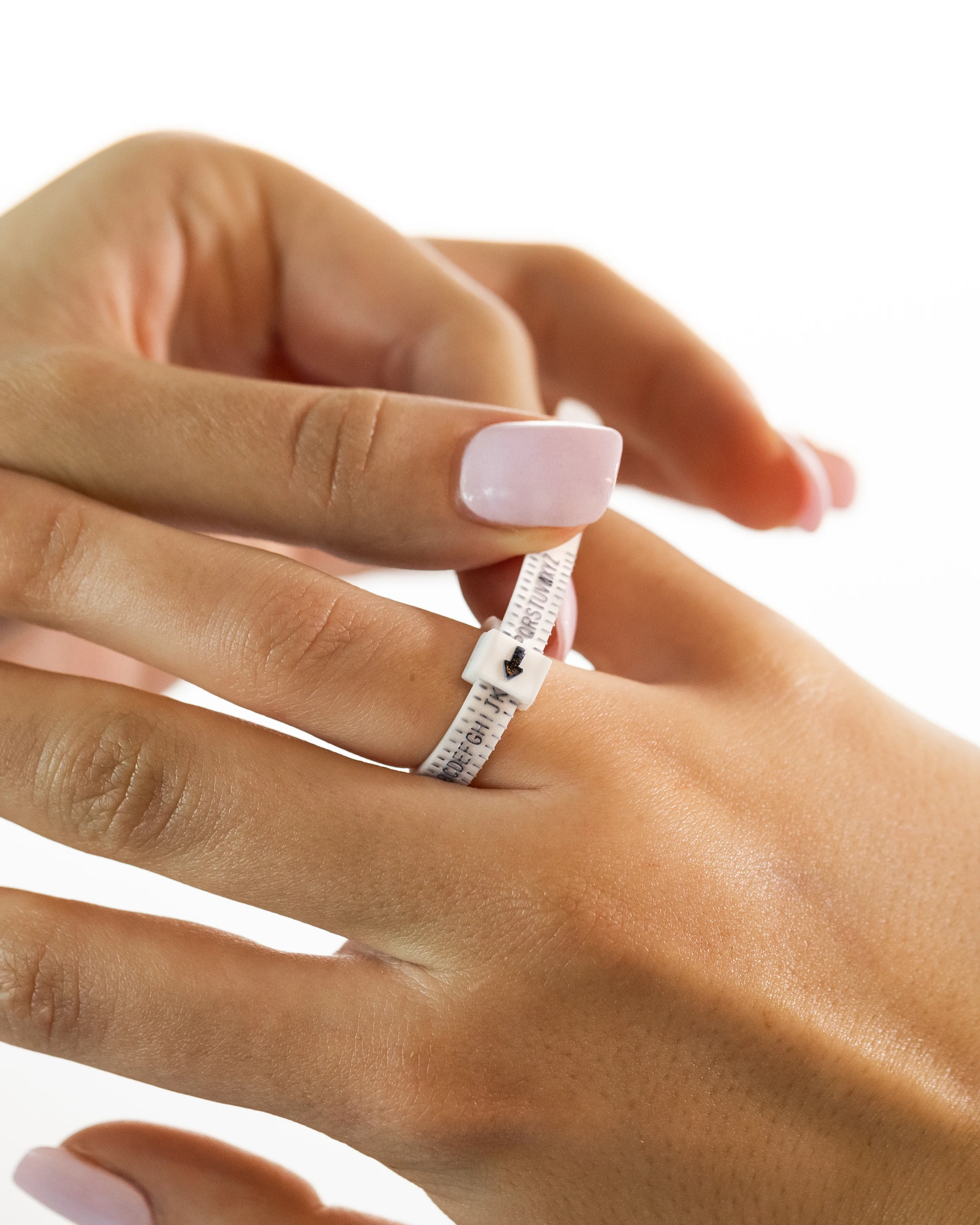
If you want guaranteed accuracy (like for an engagement ring), invest in affordable specialized tools. Ring sizer strips (pre-printed paper or plastic bands with size markers) cost $5-$10 online and are available at most jewelry stores. Ring mandrels (metal cones marked with ring sizes) are another option, though they’re better for measuring existing rings (slide the ring onto the mandrel to match the size marker). For the most precise fit, jewelry stores offer free ring sizing with a professional sizer—a metal ring of each size that you try on to find your perfect fit.
5 Foolproof Methods to Measure Ring Size
Method 1: Paper Strip Method (Measure Your Finger Directly)
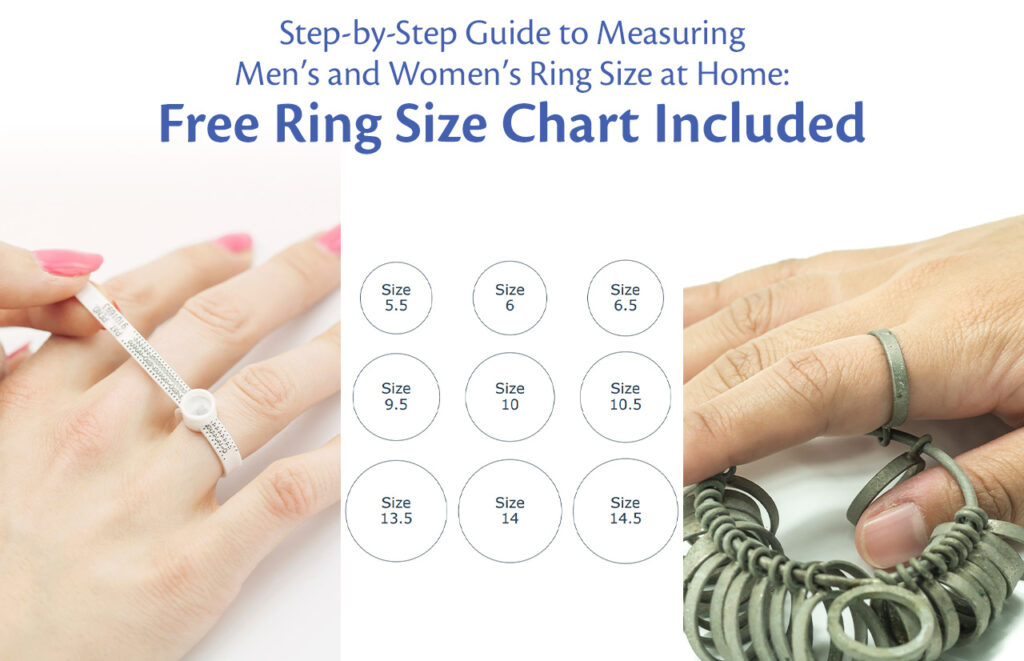
This is the easiest DIY way to measure ring size for your own finger or someone you can assist. Step 1: Cut a strip of paper (1/2 inch wide) and wrap it around the base of the finger where the ring will sit—make sure it’s snug but not tight (you should be able to fit one finger between the paper and your skin). Step 2: Mark the spot where the end of the paper overlaps with the rest of the strip. Step 3: Unfold the paper and measure the distance from the start to the mark using a ruler (in millimeters). Step 4: Use a ring size chart (most jewelry websites have free ones) to convert millimeters to your ring size. For example, 54mm = size 6, 57mm = size 7, and 60mm = size 8.
Method 2: Existing Ring Method (Discreet Gifting Hack)
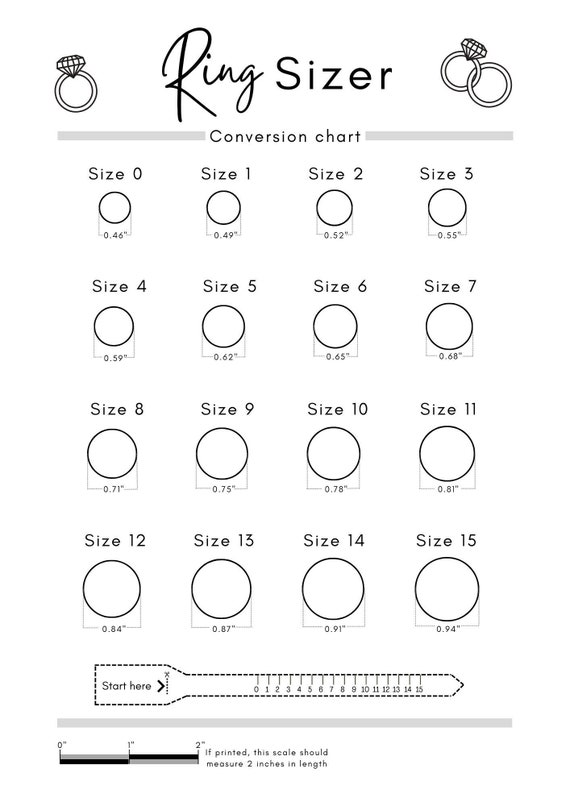
If you’re gifting a ring and can’t measure the recipient’s finger directly, borrow a ring they already wear (one that fits the same finger you’re buying for). Step 1: Place the ring on a flat surface. Step 2: Use a ruler to measure the inner diameter of the ring (the distance across the center of the ring, from inside edge to inside edge) in millimeters. Step 3: Convert the diameter to size using a chart (e.g., 17.3mm diameter = size 6, 18.2mm = size 7). Alternatively, print a free ring size template online, place the ring over the circles, and match the inner edge to the correct size marker.
Method 3: String/Dental Floss Method (For On-the-Go Measurement)
If you don’t have paper, use string or dental floss to measure ring size. Step 1: Wrap the string around the base of the finger, snug but not tight. Step 2: Mark the overlapping spot with a pen. Step 3: Lay the string flat and measure the length from start to mark in millimeters. Step 4: Convert to size using a chart. Note: String can stretch, so measure 2-3 times and take the average for accuracy. Dental floss is less stretchy than regular string, making it a better choice for this method.
Method 4: Professional In-Store Sizing (Most Accurate)
For important purchases (like engagement rings or wedding bands), visit a jewelry store for professional measure ring size service. Jewelers use metal ring sizers—sets of rings in every size that you try on the target finger. They’ll also consider factors like knuckle size (if your knuckle is larger than the base of your finger, they may recommend a slightly larger size to ensure the ring slides over easily). Most stores offer this service for free, even if you don’t buy the ring from them. Professional sizing is 99% accurate, making it worth the trip for high-stakes purchases.
Method 5: Online Ring Sizer Kits (Convenient and Affordable)
Many online jewelry retailers (like Blue Nile, James Allen, and Etsy sellers) offer free or low-cost ring sizer kits that ship to your door. These kits typically include a plastic ring sizer (a flexible band with size markers that you adjust to fit your finger) or a set of paper sizers. To use, simply wrap the sizer around your finger and adjust until it fits, then read the size marker. Online kits are great if you can’t visit a store and want more accuracy than DIY methods. Most kits come with detailed instructions to ensure you measure correctly.
Common Mistakes to Avoid When Measuring Ring Size
Measuring at the Wrong Time of Day
Finger size changes throughout the day due to temperature, hydration, and activity. Fingers are smallest in the morning (after sleeping) and largest in the evening (after a day of use) or in hot weather. To get an accurate measure ring size, measure in the afternoon or evening—when your fingers are at their “average” size. Avoid measuring after working out (fingers swell from blood flow) or when you’re dehydrated (fingers shrink).
Measuring the Wrong Finger
Each finger has a different size—your ring finger is typically smaller than your middle finger and larger than your index finger. If you’re buying a ring for your girlfriend’s ring finger, don’t measure her index finger and guess. If you’re borrowing an existing ring, make sure it’s a ring she wears on the same finger you’re shopping for. Measuring the wrong finger is one of the most common mistakes, leading to a poorly fitted ring.
Using Stretchy Materials (Like Yarn or Elastic)
Stretchy materials (yarn, elastic, or even some thin strings) can stretch while measuring, leading to an incorrect size (usually too small). Stick to non-stretchy materials like paper, dental floss, or plastic ring sizers for the most accurate measure ring size results. If you only have stretchy string, measure 3-4 times and take the largest measurement to account for stretching.
Forgetting About Knuckle Size
If your knuckle is significantly larger than the base of your finger, the ring needs to be big enough to slide over the knuckle without getting stuck. To account for this, measure the base of your finger and your knuckle, then choose a size that’s between the two. A jeweler can help with this adjustment—they may recommend a “comfort fit” ring (with a rounded inside edge) that slides over knuckles more easily.
Ring Size Conversion Chart: Millimeters to US Sizes
Once you’ve measured the circumference (length around your finger) or diameter (width across an existing ring) in millimeters, use this chart to find your US ring size— the most common sizing system in North America:
-
Size 4: 44mm circumference / 14.0mm diameter
-
Size 5: 49mm circumference / 15.6mm diameter
-
Size 6: 54mm circumference / 17.3mm diameter
-
Size 7: 57mm circumference / 18.2mm diameter
-
Size 8: 60mm circumference / 19.1mm diameter
-
Size 9: 64mm circumference / 20.4mm diameter
-
Size 10: 67mm circumference / 21.3mm diameter
For sizes outside this range (smaller than 4 or larger than 10), check with a jeweler for extended size charts. If your measurement falls between two sizes, choose the larger size for comfort.
FAQs About Measuring Ring Size
Q: Can I measure ring size using a ring app?
A: There are apps that claim to measure ring size using your phone’s camera, but they’re often inaccurate (up to 3 sizes off, per Jewelers of America). They rely on you taking a clear photo and calibrating the app correctly, which is easy to mess up. Stick to DIY methods or professional sizing for better results.
Q: How do I measure a child’s ring size?
A: For children, use the paper strip method but be extra gentle—don’t wrap the paper too tight. Children’s fingers grow quickly, so buy a ring that’s slightly larger (1/2 size up) to allow for growth. Avoid tight rings, as they can restrict circulation. Many children’s rings are adjustable, which is a safe, flexible option.
Q: What if I’m between two ring sizes?
A: If your measurement falls between two sizes, choose the larger size. You can always add a ring guard (a small plastic or metal insert that makes the ring fit tighter) if it’s too loose, but you can’t make a ring larger without resizing. For wide rings (6mm+), go up a size—wider bands fit more snugly than thin ones.
Measure Ring Size: Final Tips for Perfect Fit
Measuring ring size doesn’t have to be stressful—with the right method and a little attention to detail, you can get a perfect fit every time. Remember to measure in the afternoon/evening, use non-stretchy materials, and account for knuckle size if needed. For gifts, borrow an existing ring or use a discreet DIY method to avoid spoiling the surprise. If you’re unsure, visit a jeweler for professional sizing— it’s free and guaranteed accurate. Now that you know how to measure ring size like a pro, you can shop for rings with confidence, knowing your purchase will fit comfortably and last for years. Ready to put your skills to use? Browse our favorite ring styles (from minimalist bands to gemstone stunners) and find the perfect fit for yourself or your loved one today.