


Does stainless steel tarnish? No - and the reason is in the metal, not in how you look after it. Stainless steel forms a protective layer of chromium oxide the moment it meets air, and that invisible layer is what blocks the reaction that darkens silver, brass and copper.
Watches and jewelry are a US$544.27 billion market worldwide in 2026, according to Statista's market forecast - and stainless steel is the metal most of that market's everyday pieces are now made from, for exactly this reason.
Below: what tarnish actually is, the one situation that can still leave a stainless steel piece looking dull, how to fix it in minutes, and how gold plated stainless steel behaves differently.
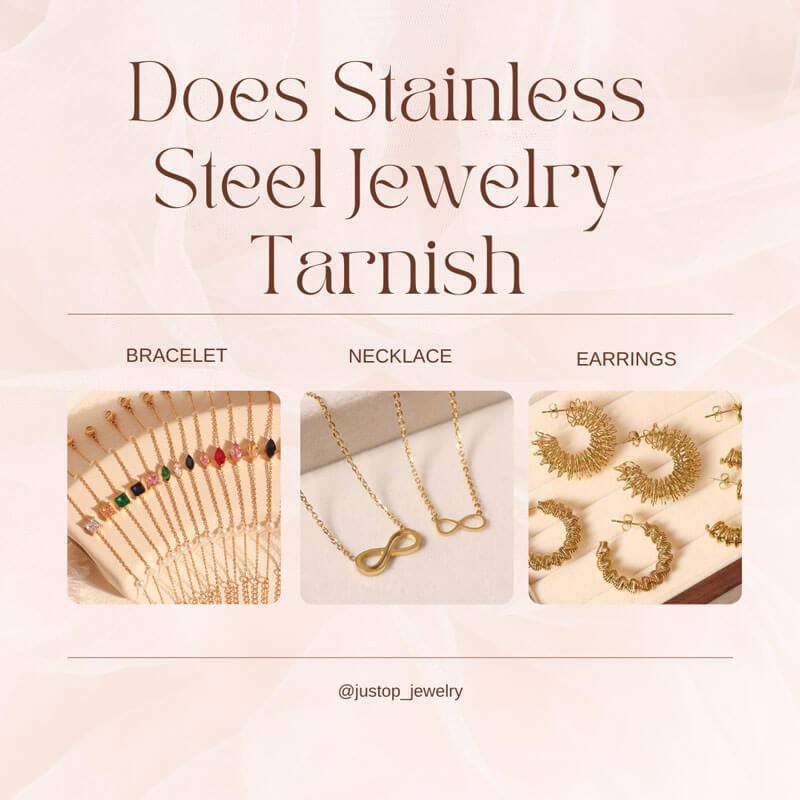
First: What Is Tarnish, and Why Does It Matter for Jewelry?
Before we dive into stainless steel, let’s clarify what "tarnish" means—especially for jewelry you wear daily:
-
Tarnish: A thin, dull layer that forms on metal surfaces when they react with oxygen, sulfur, or moisture in the air. For jewelry like silver or copper, tarnish is obvious (think black or green discoloration) and can ruin the look of a piece.
-
Why It’s a Concern: For everyday jewelry, tarnish means constant polishing, faded shine, or even skin irritation (some tarnished metals can leave green marks on skin). Stainless steel’s appeal lies in its ability to avoid this hassle— but it’s not entirely immune to surface changes.
So, Does Stainless Steel Jewelry Tarnish? The Science Behind Its Resistance
Stainless steel jewelry owes its anti-tarnish superpower to a tiny, invisible shield called the passive film—here’s how it works:
-
What Is the Passive Film?: Stainless steel is an alloy (a mix of metals) containing at least 10.5% chromium. When chromium reacts with oxygen in the air, it forms a thin layer of chromium oxide on the jewelry’s surface. This layer is microscopic but mighty—it blocks oxygen, moisture, and other corrosive substances from reaching the underlying steel.
-
Self-Healing Magic: Unlike other metals (like silver, whose tarnish only gets worse), the passive film on stainless steel repairs itself. If your jewelry gets scratched (e.g., a ring nicked on a doorknob), the chromium in the steel reacts with oxygen again to rebuild the shield—keeping tarnish at bay.
The Bottom Line for Jewelry:
Stainless steel jewelry does not tarnish in the traditional sense. It won’t develop the dark, flaky film that plagues silver or copper, even with daily wear. However, it can show surface discoloration (often mistaken for tarnish) in specific scenarios—especially when exposed to harsh substances or neglect.
Which means the more useful question is not whether stainless steel tarnishes, but whether the piece you are holding is genuinely waterproof. We answer that properly in our guide to whether stainless steel jewelry is waterproof - including which grades hold up, and how to spot a plated piece that will not.
When Stainless Steel Jewelry Might Show Discoloration (And Why)
While stainless steel jewelry doesn’t tarnish, it can develop unsightly spots or dullness that ruin its appearance. Here are the most common causes—all jewelry-specific—and how to spot them:
1. Fingerprints, Oil, or Lotion Buildup (The Most Common "Fake Tarnish")
The #1 reason stainless steel jewelry looks dull is not tarnish—it’s everyday grime:
-
What Happens: Your skin’s natural oils, lotion, perfume, hairspray, or even food residue (e.g., from eating chips) sticks to stainless steel. Over time, this buildup creates a hazy, greasy film that masks the metal’s shine—making it look "tarnished."
-
Where It Happens: On rings (from handwashing or applying lotion), necklaces (from skin oils), and bracelets (from typing or touching surfaces). Polished stainless steel is especially prone to showing fingerprints.
-
How to Spot It: The discoloration is uniform (not spotty) and wipes away easily with a damp cloth. It won’t leave marks on your skin.
2. Chlorine or Saltwater Damage (Swimming & Beach Days)
Stainless steel jewelry hates chlorine and salt—two common elements in leisure activities:
-
What Happens: Chlorine (from pools, hot tubs, or tap water) and salt (from oceans or sweat) break down the passive film. Without this shield, the steel is exposed to oxygen, leading to tiny rust spots (called "pitting") or a dull gray film.
-
Where It Happens: On rings or bracelets worn while swimming, and necklaces worn during beach vacations or workouts (sweat contains salt!).
-
How to Spot It: Tiny red/brown dots (pitting) or a dull, uneven finish. Unlike oil buildup, this won’t wipe away—though it can be cleaned with effort.
3. Sulfide Stains (From Rubber or Harsh Products)
Stainless steel can react with sulfur-containing substances to form a black film:
-
What Happens: Products like rubber watch bands, some hair dyes, or industrial soaps contain sulfur. When they touch stainless steel jewelry (e.g., a necklace rubbing against a rubber phone case), they create a black, tarnish-like stain.
-
Where It Happens: On jewelry worn near rubber (e.g., watch bands, bracelet charms) or used in harsh environments (e.g., cleaning with bleach-based products).
-
How to Spot It: A dark, smudgy film that transfers to your skin if you rub it. It’s more common on matte-finish stainless steel than polished.
4. Heat Damage (Hair Dryers & Styling Tools)
High heat can discolor stainless steel jewelry—especially delicate pieces:
-
What Happens: Holding a hair dryer, straightener, or curling iron near stainless steel (e.g., a necklace while styling hair) can break down the passive film. This leads to rainbow-colored spots (called "heat tint") or a dull brownish hue.
-
Where It Happens: On necklaces, earrings, or bracelets worn close to the head during styling.
-
How to Spot It: Iridescent blue/purple/gold spots that are most visible in direct light.
How to Prevent Stainless Steel Jewelry From Discoloring
The key to keeping stainless steel jewelry shiny is protecting its passive film and avoiding the substances that damage it. Follow these jewelry-specific tips:
For Daily Wear (Rings, Necklaces, Bracelets)
-
Remove Before "Risky" Activities:
-
Take off jewelry before swimming (pool or ocean), hot tubbing, or showering (chlorine and soap buildup).
-
Remove rings and bracelets before applying lotion, perfume, hairspray, or makeup—let products dry completely before putting jewelry back on.
-
Take off necklaces and bracelets during workouts (sweat’s salt breaks down the passive film) or heavy chores (e.g., gardening, cleaning with bleach).
-
Clean After Every Wear:
-
Wipe jewelry with a soft, dry microfiber cloth (the kind used for eyeglasses) to remove oil and fingerprints. This takes 10 seconds and keeps buildup at bay.
-
For deeper cleaning (once a week): Mix warm water with a drop of mild dish soap (avoid antibacterial or citrus-scented soaps—they’re too harsh). Gently scrub with a soft-bristled toothbrush (for small crevices, like necklace links or ring engravings). Rinse thoroughly and pat dry immediately with a towel.
-
Store Properly:
-
Keep stainless steel jewelry in a dry, airtight container (e.g., a ziplock bag, jewelry pouch, or tarnish-resistant box) to avoid moisture. Add a silica gel packet to absorb humidity (great for travel!).
-
Don’t store stainless steel with other metals (like silver or copper)—they can transfer tarnish or chemicals. For example, a silver necklace’s tarnish can rub off on a stainless steel bracelet.

For Special Care (Delicate or Polished Pieces)
-
Avoid Abrasive Cleaners: Never use steel wool, scouring pads, or harsh jewelry cleaners (e.g., those for silver) on stainless steel—they scratch the surface and break the passive film.
-
Polish Gently: For polished stainless steel jewelry that’s lost its shine, use a stainless steel polish (e.g., Wright’s Stainless Steel Polish) or a tiny amount of olive oil. Apply with a soft cloth, rub in circular motions, and buff dry.
-
Protect From Rubber: If you have a stainless steel watch or bracelet with rubber components, wrap the stainless steel parts in a thin cloth to prevent direct contact with rubber.
How to Fix Discolored Stainless Steel Jewelry (Step-by-Step)
If your stainless steel jewelry already has discoloration, don’t panic—most issues are easy to fix with household items. Here’s how to tackle common problems:
1. Remove Fingerprints/Oil Buildup
-
What You Need: A soft microfiber cloth and rubbing alcohol (or water + mild soap).
-
How to Do It:
-
Dampen the cloth with rubbing alcohol (or soapy water).
-
Wipe the jewelry in the direction of the steel’s grain (most stainless steel has a subtle grain—wiping with it prevents scratches).
-
Dry immediately with a clean cloth to avoid water spots.
2. Fix Chlorine/Saltwater Pitting or Dullness
-
What You Need: Baking soda (or Bar Keepers Friend) and a soft-bristled toothbrush.
-
How to Do It:
-
Make a paste with 2 parts baking soda and 1 part water (or use Bar Keepers Friend directly— it’s designed for stainless steel).
-
Apply the paste to the discolored area and let it sit for 5–10 minutes (don’t let it dry completely).
-
Gently scrub with the toothbrush (use light pressure—scrubbing too hard scratches the steel).
-
Rinse thoroughly with warm water and pat dry. For tough spots, repeat once.
3. Remove Sulfide Stains (Black Film)
-
What You Need: Hydrogen peroxide (3%) and a cotton ball.
-
How to Do It:
-
Dampen the cotton ball with hydrogen peroxide.
-
Gently rub the stained area—you’ll see the black film lift off.
-
Rinse with water and dry immediately. Avoid using peroxide on colored stainless steel (it can fade dyes).
4. Fix Heat Tint (Rainbow Spots)
-
What You Need: White vinegar (or lemon juice) and a soft cloth.
-
How to Do It:
-
Soak the cloth in white vinegar (or lemon juice—its acidity breaks down heat damage).
-
Wipe the rainbow spots in circular motions for 1–2 minutes.
-
Rinse with water and dry— the tint should be gone.
Will Gold Plated Stainless Steel Tarnish?
No - and this is the question worth answering carefully, because gold plated jewelry has a bad reputation that comes from what is underneath the plating, not from the plating itself.
Tarnish is a reaction between a metal and sulfur in the air. Stainless steel does not react that way, so the steel beneath an 18K gold plated finish stays stable and there is nothing pushing the plating off from below. That is the opposite of gold plating over brass, where the brass corrodes and lifts the gold layer - which is why plated brass jewelry goes patchy after a few months and plated stainless steel does not.
Our tarnish-free jewelry is built this way on purpose: 18K gold plated 316L stainless steel, waterproof, sweatproof and tarnish-free, with the gold look on a base that survives the shower.
Will 18K Gold Plated Stainless Steel Tarnish?
No. 18K gold plating is a thicker gold layer than the flash plating used on cheap jewelry, and because the 316L base beneath it does not corrode, nothing lifts or flakes underneath. The one thing that can still happen is surface wear on the plating itself if a piece is stored loose in a dish and rubs against other jewelry - so store pieces separately, and clean with warm water and a soft cloth rather than anything abrasive.
Frequently Asked Questions About Stainless Steel Jewelry Tarnish
Does stainless steel tarnish in the shower?
No. Showering does not cause tarnish on stainless steel - the metal does not react with water or with soap. Rinsing the piece and drying it afterwards is all the maintenance it needs.
What can dull stainless steel jewelry if it does not tarnish?
Residue. Lotion, sunscreen, hair products and skin oils build up a film on the surface and inside the links of a chain, and that film is what makes a piece look dull. It is not tarnish, and it comes off with warm water and a drop of mild soap.
Does stainless steel jewelry tarnish over time?
No. The protective chromium oxide layer re-forms whenever the surface is scratched, so the metal does not degrade with age the way silver or brass does. A stainless steel piece looks the same in year five as it did in year one if it is rinsed occasionally.
Is gold plated stainless steel better than gold plated brass?
Yes, and the difference is what sits underneath. Brass corrodes and pushes the plating off, while 316L stainless steel does not corrode, so the plating has nothing working against it from below. That is the reason plated stainless steel lasts years where plated brass dulls in months.
Q1: Is stainless steel jewelry "tarnish-proof"?
A: No—"tarnish-proof" is a marketing myth. Stainless steel is tarnish-resistant, but it can still discolor from oil, chlorine, or heat. High-quality stainless steel (like 316L, used in most jewelry) is more resistant than lower-grade steel (like 430).
Q2: Will stainless steel jewelry leave green marks on my skin?
A: Almost never! Unlike copper or brass (which react with skin oils to leave green marks), stainless steel’s passive film prevents metal transfer. The only time it might leave a mark is if it has a cheap nickel plating (avoid nickel-plated stainless steel if you have sensitive skin) or is heavily discolored from sulfur.
Q3: Can I wear stainless steel jewelry in the shower?
A: It’s not recommended. Shower water contains chlorine (from tap water) and soap, which build up on the jewelry and break down the passive film over time. This leads to dullness or pitting—save your stainless steel pieces for dry wear.
Q4: How long does stainless steel jewelry last without discoloring?
A: With proper care, high-quality stainless steel jewelry can last 5–10 years (or longer!) without significant discoloration. It’s one of the most durable jewelry materials—many people pass down stainless steel pieces as heirlooms.
Q5: Is stainless steel jewelry better than silver for everyday wear?
A: Yes—for most people. Stainless steel is more resistant to tarnish, scratches, and damage than silver. It also doesn’t require frequent polishing (unlike silver) and is more affordable. Silver is better for special occasions, but stainless steel is the clear winner for daily use.
If you are buying with this in mind, three collections are worth starting with: our tarnish-free jewelry, the stainless steel jewelry this article is about, and waterproof jewelry for how the pieces behave in water day to day. If you want the grade itself explained from the ground up, we wrote a separate guide to what 316L stainless steel jewelry is, and if you need to clean a piece, the full routine is in how to clean stainless steel jewelry.
Conclusion: Stainless Steel Jewelry—Low-Maintenance, Long-Lasting, and Shiny
Stainless steel jewelry’s resistance to tarnish is one of its biggest perks—but it’s not indestructible. With simple daily care (wiping away oil, avoiding chlorine, storing properly), you can keep your pieces looking as good as new for years. Whether you’re wearing a stainless steel ring to work, a necklace to the gym, or a bracelet on vacation, remember: its strength lies in the passive film. Protect that film, and your jewelry will reward you with lasting shine.
Here’s to stainless steel jewelry that works as hard as you do—no tarnish, no fuss, just style.


